
overview
We worked with a Government agency who subsidise broadband and mobile infrastructure development to ensure high-speed connectivity in remote and rural locations. We developed a grant management platform to support a new rural mobile network scheme, a public and private investment of £1 billion to develop new and upgrade existing mobile infrastructure in rural areas across the UK.
client
Major government department
role and duration
Interaction designer
Workshop facilitation, user research, wireframing, content and interface design, prototype development
Nov 2022 – Apr 2023
The Challenge
The scheme was set to launch in June 2023, with the grant management platform going live shortly after. However, operational processes for the platform were not fully defined, and the fixed launch date meant we had a tight timeline to deliver the platform.
We were tasked with guiding our client through the Discovery and Design phases, helping them define the platform’s functionality and user journeys, and delivering a clear specification for development within the set timeframe.
Our approach
We used a range of UX and business analysis techniques to ensure the platform met both user and operational needs:
User research and stakeholder engagement: We facilitated a series of in-depth discovery workshops to gather comprehensive insights from all stakeholder groups including internal teams such as operations, finance, and commercial, along with external broadband suppliers and partners.
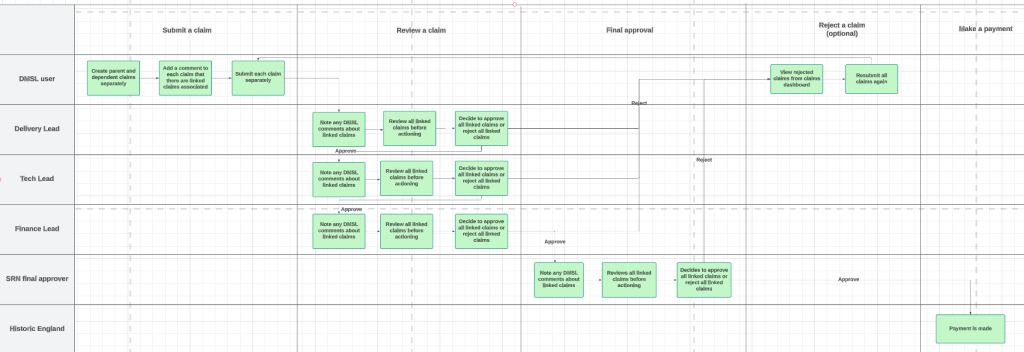
Journey mapping and process definition: Working with the client, we created detailed journey maps to help visualise user interactions and define operational workflows.
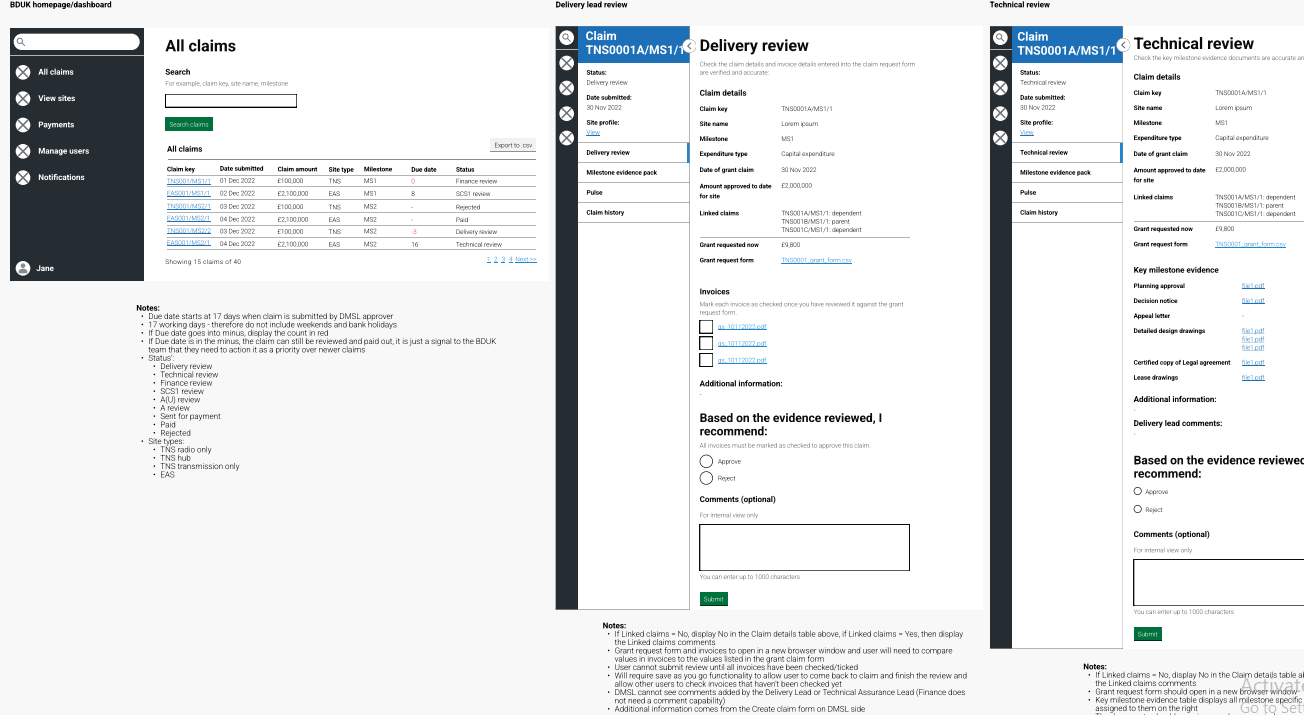
Wireframing: We developed low-fidelity wireframes using Figma to visualise key workflows and platform interfaces across all 3 user roles. These wireframes were used in client workshops to validate our understanding of the requirements and refine the platform’s functionality and navigation.
Iterative design: After validating the initial wireframes, we progressed to high-fidelity Figma prototypes. These prototypes were tested with key users to ensure that the platform’s interface was intuitive and met usability standards. We used GDS Service Standard guidelines and implemented accessible workarounds to address areas where the platform wasn’t fully GDS-compliant.
Accessibility audit: To ensure inclusivity, we conducted an accessibility audit with specialists. We worked closely with developers to implement accessibility recommendations into the final design.
Collaboration with development teams: Throughout the process, we collaborated with third-party developers to translate the Figma designs into the PEGA platform interface, ensuring a seamless transition from design to implementation.
Results
The grant management platform was successfully delivered on time and passed user acceptance testing. It was ready for the scheme’s launch in June 2023, providing an intuitive and user-friendly interface to manage grant applications and payments.
The platform’s streamlined processes and improved user experience contributed to the decommissioning of the legacy technology and annual cost savings of £390k.
Key learnings
Defining the unknown: One of the biggest challenges we faced was that the client initially lacked a clear vision of what they wanted from the platform. This required us to take a highly iterative approach, using designs not only as deliverables but as a tool for discovery. By creating and presenting prototypes early, we helped the client visualise potential solutions, which in turn allowed them to refine their requirements. This process highlighted the value of design as a tool to start conversations and uncover hidden needs.
Collaboration with third-party developers: Working with third-party developers to translate our designs into the PEGA platform presented its own set of challenges. Ensuring our design vision was implemented within the technical constraints of the platform required close collaboration and constant communication. This taught us the importance of being flexible and maintaining an open dialogue between design and development teams, as well as the need to balance creative solutions with platform limitations.
Accessibility challenges: Another key challenge was that the chosen platform wasn’t fully aligned with accessibility and the GOV.UK standards. We had to design creative workarounds to ensure the service was as accessible as possible, while still adhering to GDS Service Standard guidelines. This experience reinforced the importance of accessibility in user-centered design and taught us how to adapt when technical limitations arise.